
You try to watch your favourite show abroad, only to see "This content is not available in your region." You attempt to download an app, but your country's app store blocks it. You visit a website, and it refuses to load because of where you are. Geo-blocking restricts user access to content based on their geographical location, implemented by internet service providers, websites, and governments. This guide explains what geo-blocking is, how it detects your location with remarkable precision, why companies and governments use it, and what it means for your privacy and ability to access content worldwide.
Table of Contents
- Understanding Geo-Blocking: What It Is And How It Works
- Why Geo-Blocking Exists: Purposes And Uses
- Common Challenges And Limitations Of Geo-Blocking
- How Geo-Blocking Affects Your Online Access And Privacy
- Explore IP Lookup Tools To Understand Your Online Location
- What Is Geo-Blocking? Frequently Asked Questions
Key takeaways
| Point | Details |
|---|---|
| Geo-blocking restricts access | Content and services are blocked based on your geographic location detected through IP addresses. |
| Multiple purposes drive it | Regulatory compliance, licensing agreements, security measures, and censorship all motivate geo-blocking. |
| Accuracy is high but imperfect | Modern systems achieve about 99.8% accuracy, yet database errors and shared IPs cause mistakes. |
| Bypass attempts face detection | VPNs and proxies offer workarounds, but platforms invest heavily in blocking these tools. |
| Privacy implications exist | Location tracking required for geo-blocking reveals your approximate whereabouts to service providers. |
Understanding geo-blocking: what it is and how it works
Geo-blocking is a method that restricts access to online content depending on the user's geographic location. When you connect to the internet, your device receives an IP address that acts like a digital postal code. Websites and services use this address to determine where you are in the world, then decide whether to grant or deny access based on preset rules.
The technical foundation relies primarily on detecting your IP address, which reveals your approximate physical location through IP geolocation databases. These databases map IP addresses to geographic coordinates, cities, regions, and countries. Geo-blocking uses geolocation technology with approximately 99.8% accuracy thanks to sophisticated content delivery networks and regularly updated mapping systems.
Several parties implement geo-blocking for different reasons:
- Internet service providers enforce governmental restrictions on banned websites or services
- Streaming platforms limit content libraries based on licensing agreements for specific territories
- E-commerce sites control product availability and pricing across different markets
- Financial institutions prevent transactions from high-risk regions to reduce fraud
- Government agencies block access to content deemed illegal or harmful within their jurisdictions
Geo-blocking takes various forms beyond simply blocking entire websites. You might encounter restrictions on specific features, payment methods unavailable in your country, apps missing from your regional app store, or price differences based on your location. An IP to location finder reveals exactly what geographic data websites can see about you, helping you understand why certain restrictions apply.
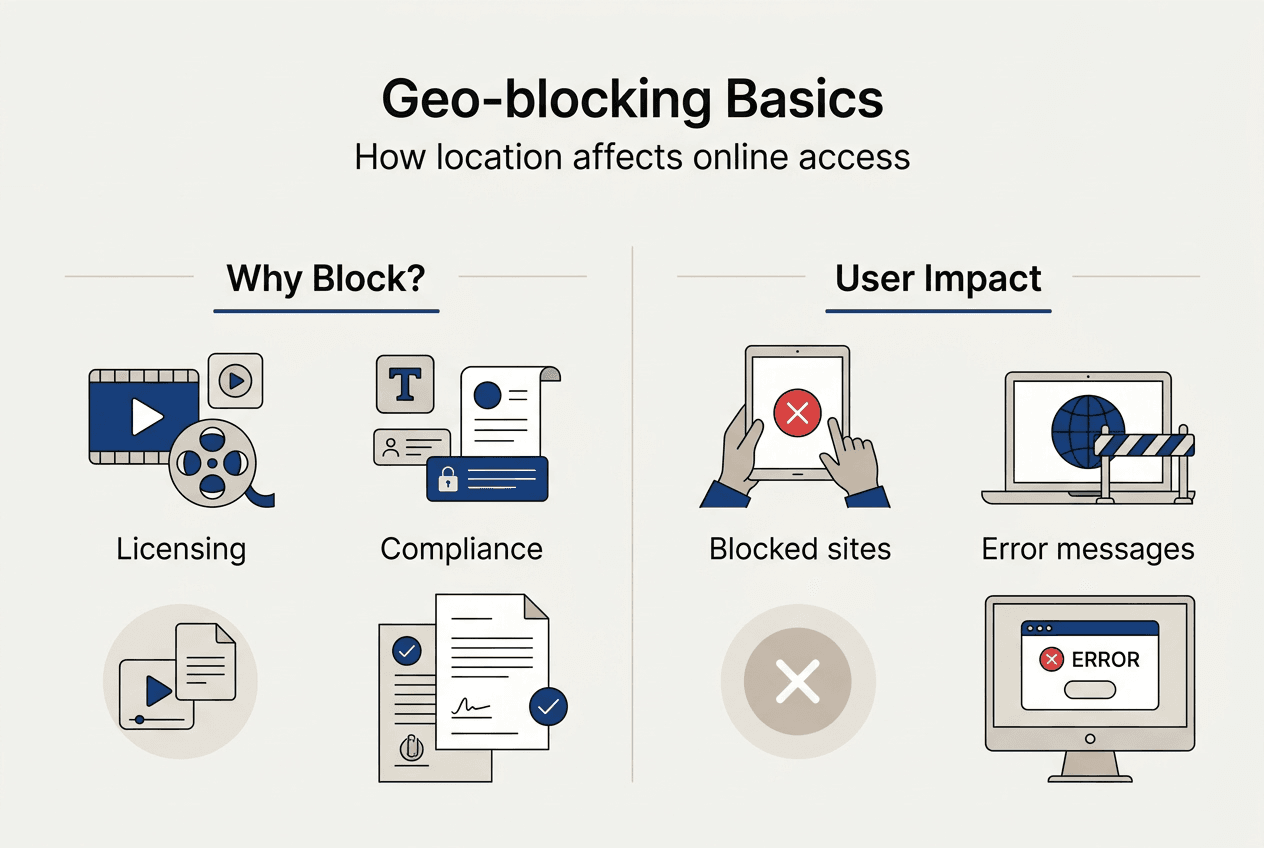
The system works seamlessly in the background. When you request a webpage or service, the server checks your IP address against its geolocation rules within milliseconds. If your location falls outside permitted regions, you receive an error message or redirect. This process happens so quickly that you typically only notice it when access is denied.
Why geo-blocking exists: purposes and uses
Geo-blocking serves multiple purposes that extend far beyond simple content control. Understanding these motivations helps explain why the practice remains widespread despite user frustration.
Regulatory compliance drives much geo-blocking implementation. Countries enforce different laws regarding data protection, copyright, gambling, and content standards. The General Data Protection Regulation in Europe, for instance, requires specific handling of personal data that differs from regulations elsewhere. Companies use geo-blocking to ensure they only process data from regions where they can legally operate and comply with local requirements. Data localisation laws in countries like Russia and China mandate that certain information stays within national borders, making geo-blocking a compliance necessity.
Content licensing creates another major driver. Streaming platforms like Netflix, BBC iPlayer, and Disney+ negotiate separate agreements for each territory. A film studio might sell European rights to one distributor and Asian rights to another. These exclusive deals mean platforms must restrict content to specific regions to honour contractual obligations. Breaking these agreements risks legal action and loss of future content deals.
Security considerations justify geo-blocking in many contexts. Financial institutions limit transactions from countries with high fraud rates. Corporate networks block access from regions where they have no legitimate business operations, detecting suspicious activity using geolocation IP trackers. This approach reduces attack surfaces and prevents unauthorised access attempts from known threat locations.
Censorship represents a controversial use of geo-blocking. Governments, institutions or private parties may engage in censorship to restrict access to content they find objectionable, threatening, or contrary to their interests. Some nations block social media platforms, news sites, or political content. Private companies may restrict access to services in countries where their business model conflicts with local norms or regulations.
Commercial motives also play a significant role:
- Price discrimination allows companies to charge different amounts based on regional purchasing power
- Market segmentation enables phased product launches and controlled expansion
- Competitive advantage through exclusive regional offerings
- Resource allocation by limiting bandwidth to profitable markets
Geo-blocking has become a critical chokepoint in modern content delivery, enabling unprecedented control over information flow across borders whilst simultaneously creating new forms of digital inequality.
The interplay between these purposes creates a complex landscape. A single geo-blocking implementation might simultaneously serve legal compliance, commercial interests, and security goals. This multiplicity makes the practice difficult to challenge or reform, as each stakeholder defends their specific use case.
Common challenges and limitations of geo-blocking
Despite its widespread use and high accuracy rates, geo-blocking faces significant practical limitations that affect both users and service providers.
IP geolocation accuracy, whilst impressive, remains imperfect. Geo-blocking relies on IP geolocation databases, which are not always perfectly accurate, leading to potential misidentification. Databases become outdated as ISPs reassign IP blocks or users connect through mobile networks with constantly shifting addresses. A user in London might appear to be in Manchester if their ISP routes traffic through a regional hub. These errors cause legitimate users to face wrongful blocking whilst occasionally granting access to those who should be restricted.
Overblocking creates substantial collateral damage. When services block entire IP ranges to stop abuse, they often catch innocent users in the net. Piracy Shield's aggressive IP blocking leads to widespread unintended disruptions and overblocking, affecting even major services like Google Drive. Shared IP addresses used by VPN providers, cloud services, or large organisations become targets, blocking thousands of legitimate users simultaneously. The Italian case demonstrates how aggressive blocking policies can disrupt critical infrastructure and everyday services.
Users constantly attempt to circumvent geo-blocking through various methods. Virtual private networks, proxy servers, and Smart DNS services route traffic through different countries, masking true locations. However, content providers invest heavily in detecting and blocking these tools. They maintain lists of known VPN server IPs, analyse connection patterns, and use sophisticated detection algorithms. This creates an ongoing arms race where bypass methods work temporarily before being blocked.
The effectiveness of geo-blocking varies significantly:
| Aspect | Advantages | Disadvantages |
|---|---|---|
| Content control | Enforces licensing agreements precisely | Frustrates paying customers seeking legitimate access |
| Legal compliance | Meets regulatory requirements efficiently | Creates complex management across jurisdictions |
| Security | Blocks threats from high-risk regions | Catches legitimate users in broad IP bans |
| Accuracy | Achieves 99%+ identification rates | Outdated databases cause misidentification |
| User experience | Invisible when working correctly | Generates confusion and support requests when blocking occurs |
Maintenance costs add another challenge. Keeping geolocation databases current requires continuous updates as IP assignments change. How accurate is IP geolocation today depends partly on how recently databases were refreshed. Companies must balance blocking effectiveness against operational costs and user satisfaction.
False positives damage customer relationships. When legitimate users face unexpected blocks, they experience frustration and may abandon services entirely. Support teams spend significant time investigating and resolving geo-blocking errors. The reputational cost of blocking paying customers can outweigh the benefits of restriction enforcement.
Pro Tip: If you implement geo-blocking, monitor its effectiveness regularly and tune rules to minimise false positives. Review blocked IP ranges monthly, maintain updated geolocation databases, and create clear processes for users to report wrongful blocking. A proxy check helps identify which visitors use anonymisation tools, allowing more nuanced blocking decisions rather than blanket bans.
How geo-blocking affects your online access and privacy
Geo-blocking creates tangible barriers that shape your daily internet experience in ways you might not immediately recognise.
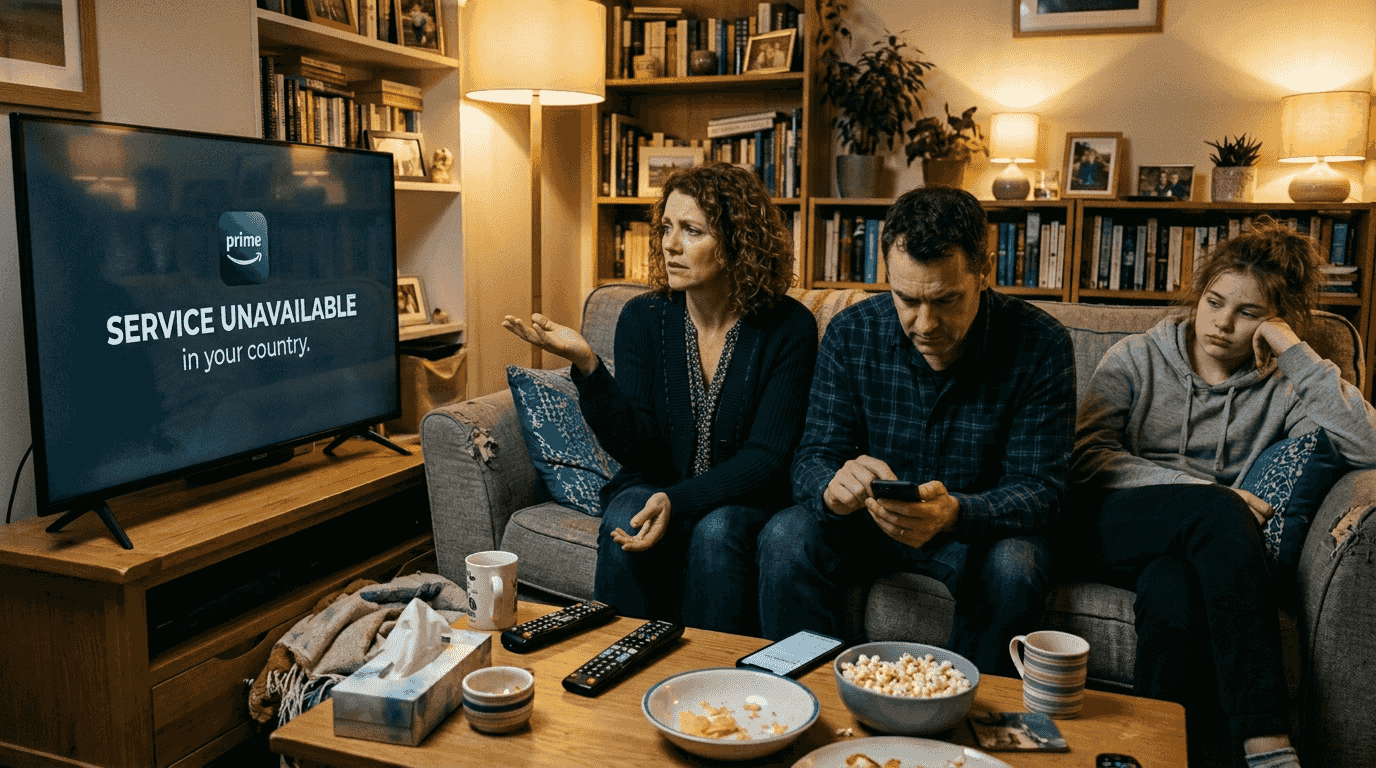
Streaming services implement some of the most visible geo-blocking. Netflix offers different content libraries across countries, with the US catalogue containing significantly more titles than most other regions. BBC iPlayer restricts access to UK IP addresses only. Spotify limits certain songs and podcasts based on licensing territories. These restrictions frustrate users who pay subscription fees but cannot access content available elsewhere. Travellers find themselves suddenly locked out of services they use at home.
App stores and payment systems enforce regional boundaries. Apple's App Store and Google Play offer different apps depending on your country. A banking app available in Australia might be invisible to users in Canada. Payment processors like PayPal restrict transactions from certain countries. Cryptocurrency exchanges block entire regions to comply with varying regulatory frameworks. These limitations prevent you from accessing tools and services that might be perfectly legal in your location.
VPN usage to bypass geo-blocking faces increasingly sophisticated countermeasures. Streaming platforms invest millions in VPN blocking tools powered by sophisticated IP mapping and deep packet inspection technologies. Services detect VPN traffic through various methods including IP blacklists, DNS leak detection, and traffic pattern analysis. Even premium VPN providers struggle to maintain reliable access as platforms continuously update their blocking mechanisms. Geo-blocking is a security measure on VPN portals and gateways to block users from unauthorised regions, creating a circular challenge where the tools meant to bypass restrictions become targets themselves.
Privacy implications extend beyond simple location tracking. Geo-blocking requires constant monitoring of your IP address and approximate location. This data collection reveals patterns about where you connect from, when you travel, and which networks you use. Whilst most services claim to handle this data responsibly, the very nature of geo-blocking means your geographic information is logged and analysed.
To check if geo-blocking affects your access:
- Visit services you want to use and note any regional restriction messages
- Use an IP lookup tool to see what location websites detect
- Compare available content or features with what users in other countries report
- Check for error messages mentioning geographic restrictions or unsupported regions
- Test whether a VPN detection tool online identifies your connection as anonymised
Common error messages indicating geo-blocking include "This content is not available in your region," "Service unavailable in your country," or "Your location is not supported." Sometimes restrictions are silent, with content simply missing from catalogues or features greyed out without explanation.
The impact extends to business and professional contexts. Cloud services may restrict features by region. Video conferencing platforms might limit participant numbers based on where you connect from. Professional tools and databases often have geographic licensing that prevents access outside permitted territories. These restrictions can hinder remote work and international collaboration.
Pro Tip: Protect your privacy by understanding how geolocation data is collected and used. Regularly check your visible location using trustworthy IP lookup tools to verify what information websites can see. Review privacy policies to understand how services handle your geographic data. Consider whether the convenience of location-based services justifies the tracking they require. IP geolocation explained provides deeper insights into how your location becomes visible online and what you can do to manage this information.
Explore IP lookup tools to understand your online location
Understanding exactly what geographic information you reveal online empowers you to make informed decisions about privacy and access. InstantIPLookup.com provides comprehensive tools to see precisely how geo-blocking systems detect your location.
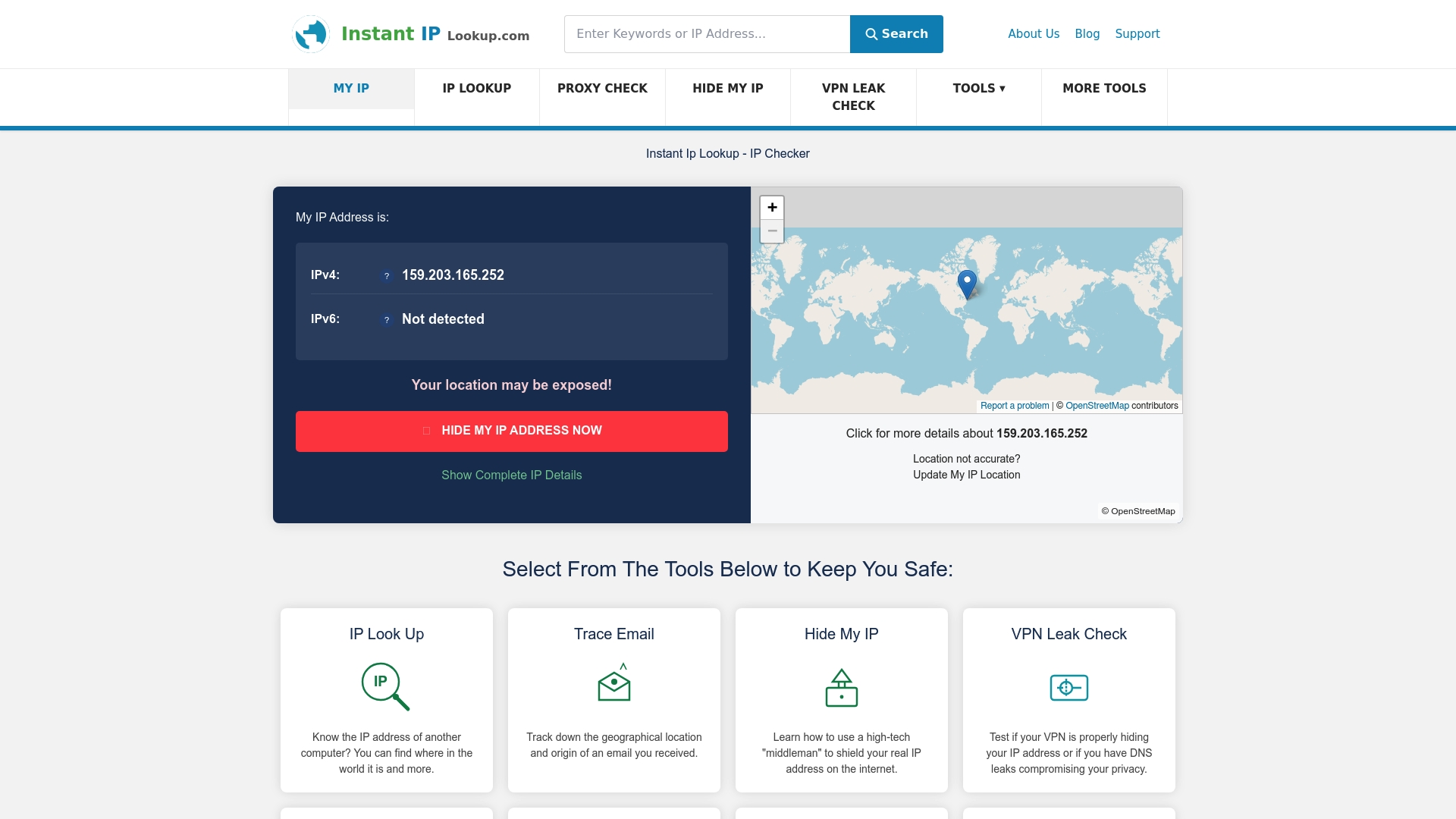
Our IP address lookup tool reveals your current public IP address along with detailed geolocation data including city, region, country, ISP, and network details. This information shows exactly what websites and services see when you connect, helping you understand why certain content might be blocked or restricted. You can verify whether your VPN is working correctly, check if your location appears accurate, and identify potential privacy leaks.
The platform also offers proxy and VPN detection capabilities, letting you test whether anonymisation tools successfully mask your true location. Regular checks help you stay informed about your online footprint and troubleshoot access issues caused by geo-blocking. Whether you're concerned about privacy, trying to access region-locked content, or simply curious about your digital presence, these tools provide the transparency you need. Explore our IP geolocation accuracy guide to learn more about how location detection works and its implications for your online experience.
What is geo-blocking? frequently asked questions
What types of content are commonly geo-blocked?
Streaming video and music platforms like Netflix, Spotify, and BBC iPlayer frequently use geo-blocking to enforce licensing agreements. Online games, mobile apps, payment services, and e-commerce websites also restrict access based on location. Government censorship, regional regulations, and commercial licensing deals all influence these restrictions, creating different digital experiences across countries.
How accurate is geo-blocking technology?
Modern geo-blocking systems use IP address detection with approximately 99.8% accuracy when databases are current and properly maintained. However, shared IP addresses, outdated geolocation databases, mobile network routing, and proxy usage can cause incorrect blocking or unintended access. Accuracy varies depending on how frequently providers update their IP mapping data and the sophistication of their detection systems.
Can I legally bypass geo-blocking using a VPN?
Using VPNs to bypass geo-blocking is legal in most countries, though some nations like China and Russia restrict or ban VPN usage entirely. However, circumventing geo-blocking often violates streaming service terms of use even when not illegal. Many providers employ sophisticated VPN detection to block such attempts, and violation of terms can result in account suspension or termination regardless of legality.
Why do I sometimes get blocked even though I'm in an allowed country?
Inaccurate or outdated IP geolocation databases can mistakenly associate your IP address with a different country or region. Shared IP ranges used by VPNs, cloud services, or large organisations often get blocked entirely, catching legitimate users. Temporary network routing issues, aggressive blocking policies, or recent IP reassignments by your ISP can also cause false denials even when you're physically located in a permitted area.
How does geo-blocking relate to online privacy concerns?
Geo-blocking requires continuous tracking of your IP address and geographic location, exposing your approximate whereabouts to every service you access. This location data becomes part of your digital footprint, potentially revealing travel patterns, home location, and network usage habits. Whilst most legitimate services handle this data responsibly, the collection itself creates privacy implications, emphasising the importance of understanding what geographic information you reveal and choosing services with transparent data handling practices.